

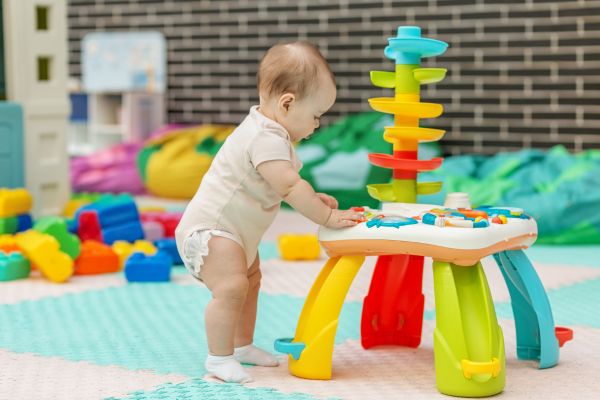
A baby’s world begins in soft shapes, shadows, light, and movement. In the early days, their vision is still blurry, and the clearest thing they may see is the face of the person holding them close. Over time, that quiet gaze becomes more focused. They begin to track movement, recognize familiar faces, reach for toys, study colors, and explore the world with curious eyes.
Visual development in babies is a gradual process. It does not happen all at once, and it is closely connected to brain growth, movement, bonding, and learning. A baby’s eyes and brain are learning to work together, turning light and shape into meaning. This is why vision is not just about seeing clearly. It also helps babies understand distance, follow faces, coordinate their hands, and respond to the people around them.
For parents, watching this development can be both fascinating and a little confusing. One day a baby seems to stare past everything. A few weeks later, they are watching a parent walk across the room. Knowing what is typical at each stage can help parents feel more confident and notice when something may need attention.
How Babies See the World at Birth
Newborn vision is limited, but it is not absent. A newborn can see, though their eyesight is still developing. In the first days and weeks, babies see best at close range, usually around the distance between a parent’s face and the baby’s face during feeding or cuddling. This is one reason newborns often seem most interested in faces that are held close.
Their focus is still weak, and faraway objects may appear blurry. Bright light may make them blink or turn away. High-contrast patterns, such as black and white shapes, may catch their attention more than soft pastel colors. Faces are especially important. Even before they understand the details of a face, babies are naturally drawn to face-like shapes and expressions.
At this stage, the eyes may not always move perfectly together. Occasional crossing or wandering can happen in very young babies because eye muscles are still gaining control. However, if one eye seems constantly turned inward or outward, or if the eyes never seem to align, it is worth discussing with a pediatrician.
The First Month of Visual Awareness
During the first month, a baby’s visual world is mostly close and simple. They may briefly look at a parent’s face, stare at light coming through a window, or turn toward movement. Their gaze may not last long, and that is normal. Newborns tire quickly, and looking is hard work for a developing brain.
Parents may notice that their baby seems to study their face during feeding. These quiet moments are more meaningful than they look. The baby is learning contrast, shape, movement, and emotional connection. They may not yet smile socially, but their eyes are already helping them build familiarity with the people who care for them.
Gentle face-to-face time is valuable. Holding a baby close, speaking softly, and allowing them to look without too much noise or stimulation can support early visual development. Babies do not need complicated toys at this stage. A calm face, soft light, and simple contrast are enough.
Two to Three Months: Tracking and Recognition
Around two to three months, many babies begin to track moving objects more smoothly. A parent may move a toy slowly from side to side and notice the baby following it with their eyes. This is a major step in visual development in babies because it shows that the eyes and brain are becoming better coordinated.
Babies may also begin to recognize familiar faces more clearly. They may brighten when a parent comes near, make more eye contact, and watch expressions with interest. Their world is becoming more social. Vision and emotional bonding are working together.
Color vision also improves during this period. Babies may start showing more interest in bright colors, bold toys, and moving objects. Their focus is still developing, so they may prefer objects that are not too far away. Slow movement is easier for them to follow than fast motion.
This is also the age when babies may begin to look at their own hands. At first, it may seem like random staring, but it is part of learning body awareness. The baby is beginning to understand that their hands belong to them, and soon those hands will begin reaching toward what the eyes can see.
Four to Six Months: Reaching, Depth, and Curiosity
By four to six months, visual development becomes more active. Babies are not just looking anymore; they are using their eyes to guide movement. They may reach for toys, watch objects fall, follow people across a room, and show excitement when they see something interesting.
Depth perception begins to improve, although it continues developing over time. Babies start understanding that objects are near or far, large or small, reachable or out of reach. This growing awareness supports rolling, reaching, sitting, and eventually crawling.
Hand-eye coordination becomes much stronger during this period. A baby may stare at a toy, reach for it, miss, try again, and finally grab it. These little attempts are not just cute; they are important practice. Vision is helping the baby plan movement.
Parents may notice their baby becoming more engaged with mirrors, colorful books, and faces. They may smile at familiar people from across the room. They may also become distracted during feeding because there is suddenly so much to look at. The world is widening.
Seven to Nine Months: Seeing and Exploring
Between seven and nine months, many babies become more mobile. They may sit steadily, roll across the floor, crawl, or scoot. As movement increases, vision becomes even more important. Babies use their eyes to judge space, avoid obstacles, find toys, and explore surroundings.
This stage often brings stronger visual memory. A baby may look for a toy that has rolled partly under a blanket or turn toward a familiar person when they enter the room. They may enjoy games like peekaboo because they are beginning to understand that people and objects can disappear and come back.
Visual attention also becomes more selective. Instead of simply staring at whatever is nearby, babies begin choosing what interests them. They may focus intensely on a small crumb, a moving pet, a shiny spoon, or a pattern on the floor. These tiny discoveries are part of learning how the world works.
During this stage, parents should create safe spaces for exploration. A baby who is learning to move needs room to look, reach, and investigate. Simple toys, safe household objects, board books, and interactive play can all encourage healthy development.
Ten to Twelve Months: Visual Skills and Everyday Learning
By the end of the first year, many babies have much stronger visual abilities. They can often judge distance better, recognize familiar people across a room, watch small objects closely, and use their eyes and hands together with more control.
They may point, wave, place objects into containers, turn pages in a board book, or try to pick up small pieces of food. These everyday actions depend partly on vision. A baby’s eyes guide their hands, and their brain learns from the result.
Babies at this age may also show preferences. They may recognize favorite books, look toward the door when someone leaves, or watch older children playing with interest. Their visual world is now connected to memory, emotion, movement, and early problem-solving.
This is also when parents may notice signs of possible difficulty more clearly. If a baby does not seem to notice objects, does not follow movement, does not make eye contact, or consistently bumps into things once mobile, it may be time to ask for professional advice.
Common Signs of Healthy Visual Development
Healthy visual development does not look exactly the same in every baby, but there are reassuring signs parents can watch for. A baby who looks at faces, follows movement, responds to light, reaches for objects, notices familiar people, and becomes curious about their surroundings is usually showing good visual progress.
Eye contact is another important sign, though it varies by temperament. Some babies are naturally intense gazers, while others look briefly and then look away. Looking away can simply mean the baby needs a break. Still, a complete lack of visual engagement or consistent failure to look toward faces should be discussed with a healthcare provider.
Babies should gradually become more visually alert. Over time, their gaze should become steadier, their tracking smoother, and their interest in objects stronger. Progress matters more than perfection.
Warning Signs Parents Should Not Ignore
While many visual differences are harmless, some signs deserve attention. Parents should speak with a pediatrician or eye specialist if a baby does not seem to focus on faces, does not track moving objects after the early months, has eyes that are often misaligned, or shows unusual sensitivity to light.
Other signs may include constant tearing, cloudy-looking eyes, white or unusual reflections in the pupil, frequent eye rubbing, drooping eyelids, or one eye that appears to move differently from the other. A baby who does not react to bright light or seems unable to notice nearby objects should also be checked.
It is especially important to ask for help if a baby loses visual skills they previously had. Regression is not something to wait out. Early evaluation can make a real difference, especially when treatment or therapy is needed.
How Parents Can Support Visual Development
Supporting visual development in babies does not require expensive equipment. Babies learn through everyday connection and safe exploration. Face-to-face interaction is one of the simplest and most powerful supports. Talking, smiling, making gentle expressions, and allowing the baby to study your face all help.
Tummy time also supports vision because it encourages babies to lift their heads, look around, and strengthen muscles needed for movement. Placing interesting toys within view can motivate reaching and turning. As babies grow, changing positions during play helps them see the world from different angles.
Books with bold pictures, simple toys, mirrors, and safe objects with different shapes can encourage visual curiosity. Moving a toy slowly from side to side can help younger babies practice tracking. For older babies, games like peekaboo, hiding toys partly under a cloth, and rolling a ball can support visual attention and coordination.
The goal is not to overstimulate. Babies need calm, repeated experiences. A few minutes of focused play can be more helpful than a room full of flashing lights and noise.
The Role of Checkups and Eye Screening
Regular checkups are important because some vision problems are not obvious at home. Pediatricians often check eye alignment, light response, and general visual behavior during routine visits. If something seems unusual, they may recommend a more detailed eye exam.
Early screening can help identify problems such as lazy eye, crossed eyes, blocked tear ducts, cataracts, or other conditions that may affect development. When vision issues are found early, treatment is often more effective.
Parents should trust their instincts, too. If something about a baby’s eyes or visual behavior feels unusual, it is reasonable to ask. A simple question at a checkup can bring peace of mind or lead to helpful support.
Conclusion
Visual development in babies is a beautiful, gradual unfolding. A newborn begins with a close, blurry view of the world, and within the first year, that world becomes sharper, brighter, and more meaningful. Vision helps babies bond, move, reach, play, recognize faces, and explore everything around them.
Every baby develops at their own pace, but steady progress is important. Parents can support healthy visual growth through face-to-face interaction, tummy time, simple play, books, movement, and regular checkups. At the same time, signs such as poor tracking, constant eye misalignment, cloudy pupils, or lack of visual interest should not be ignored.
A baby’s eyes are not just learning to see. They are helping the baby connect with people, understand space, and discover the world one small moment at a time.
