

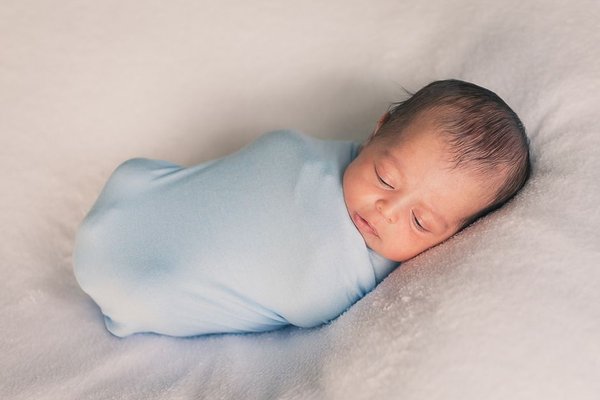
Swaddling can help some newborns settle, but a calm baby is not the same thing as a safely swaddled baby. The safety questions are separate from the wrapping technique: Is the baby on the correct sleep surface? Is the chest snug without being compressed? Can the hips and knees move naturally? Is the baby getting too warm? And has rolling started? Those checks matter every time, even if you already know how to fold a swaddle neatly.
Start With the Safe-Sleep Foundation
A swaddle does not make an unsafe sleep setup safe, and swaddling itself does not reduce the risk of SIDS. For every nap and nighttime sleep, place a swaddled baby flat on their back on a firm, level, non-inclined sleep surface such as an approved crib, bassinet, portable crib, or play yard. Keep the sleep space clear except for a fitted sheet. Pillows, positioners, loose blankets, stuffed toys, and other soft items do not belong around a sleeping newborn.
Never place a swaddled baby on their side or stomach. A wrapped baby has less freedom to use the arms and body to reposition, which makes stomach or side sleeping particularly risky. If you are learning safe sleep basics for newborns, think of the swaddle as optional; the back-sleep position and clear sleep space are the non-negotiable parts.
What a Safe Swaddle Fit Should Feel Like
Snug Around the Upper Body, Not Tight Around the Chest
A good swaddle fit should feel secure around the shoulders and torso without squeezing the ribcage or making breathing look restricted. The fabric should stay in place rather than creeping toward the face. If a blanket repeatedly loosens, rides up, or comes undone, switch to a better-fitting method or a correctly sized swaddle product instead of repeatedly tightening it.
Check the manufacturer’s size and weight guidance for commercial swaddles, and make sure closures are secure. Avoid weighted swaddles or weighted sleep products. Current safe-sleep guidance does not recommend adding weight to a baby’s chest or body during sleep.
Leave Real Room for the Hips and Knees
Safe swaddling newborn babies means securing the upper body while allowing the lower body to remain flexible. The legs should not be pulled straight down and wrapped tightly together. A newborn hip-safe swaddle leaves enough space for the hips and knees to bend and for the thighs to move outward naturally.
A simple check is to look at the baby’s lower half after wrapping. The legs should still be able to flex rather than being held rigidly straight. This matters because prolonged wrapping with the hips and knees forced into an extended position can interfere with healthy hip development. If your baby is being monitored for hip dysplasia or has been given specific positioning advice, follow the pediatric or orthopedic team’s instructions.
Keep the Face Clear and Watch for Overheating
The swaddle should stay below the shoulders and away from the mouth and nose. Do not add a loose blanket over a swaddled baby. Choose lightweight clothing and swaddle material suitable for the room rather than layering heavily “just in case.” Overheating is a safe-sleep concern, so a baby should not feel hot, sweaty, or unusually flushed during sleep.
One practical approach is to check the baby’s chest or upper back during the first part of a nap, especially after changing clothing, room temperature, or swaddle material. Hands and feet can feel cooler than the body, so they are not the best guide to overall warmth. A guide to newborn sleep temperature and clothing can help caregivers plan layers without over-bundling.
Know When to Stop Swaddling
The most important answer to when to stop swaddling is not a birthday or a fixed number of weeks. Stop as soon as your baby shows signs of trying to roll. Some babies begin rolling surprisingly early, so do not wait for a typical milestone age if you are already seeing twisting, repeated side-rolling attempts, or purposeful efforts to turn over.
Once rolling begins, a swaddled baby may reach the stomach without having the arm freedom needed to reposition effectively. Transition to sleep clothing that leaves both arms free. A correctly fitted non-weighted sleep sack can provide warmth without restraining the arms, but it still needs to be the right size so it cannot ride over the face.
For example, imagine a 10-week-old who has begun repeatedly twisting onto one side during supervised floor time. Even if that baby has never completed a full roll in the crib, those new movements are a cue to stop wrapping the arms in. Waiting for the first successful nighttime roll creates an unnecessary risk. For more on the transition, a guide to when babies start rolling can help you recognise the early cues.
Make the Same Checks at Every Sleep
Swaddle safety can slip when different people care for the same baby. Parents, grandparents, babysitters, and childcare providers should all follow the same rules. Before each sleep, confirm that the baby is on their back, the sleep surface is firm and clear, the swaddle is secure below the shoulders, the chest is not compressed, the hips can move, the baby is not overheated, and there are no rolling signs.
If a baby fights the swaddle, repeatedly escapes it, or only settles when wrapped excessively tightly, do not keep tightening the fabric. Swaddling is not essential. An arms-free sleep sack or ordinary fitted sleep clothing may be a better option.
Frequently Asked Questions
Can a newborn sleep swaddled all night?
A newborn may sleep swaddled for sleep periods if the swaddle is used safely, the baby is placed on the back on a firm, clear sleep surface, the face stays uncovered, and there are no signs of rolling. The baby should also be checked for comfortable temperature and secure fit.
How tight should a newborn swaddle be?
It should be snug enough around the upper body to stay secure, but it should not compress the chest or restrict breathing. The hips and knees need room to bend and move. If the fabric is loosening toward the face, the fit or method needs to change.
Is side sleeping safe for a swaddled baby?
No. A swaddled baby should be placed fully on the back for every sleep. Side sleeping is unstable and can lead to the baby rolling onto the stomach.
Should I stop swaddling at two or three months?
Use rolling behavior rather than a calendar date. Stop swaddling as soon as your baby shows signs of trying to roll, even if that happens earlier than expected. If you are unsure whether a movement counts as a rolling attempt, discuss it with your pediatrician and choose the safer arms-free option in the meantime.
A Safer Swaddle Is About More Than the Fold
Newborn swaddle safety comes down to a few repeatable decisions: back sleeping every time, a firm and clear sleep space, secure but non-restrictive swaddle fit, free hip movement, sensible temperature control, and an early transition out of arm-restricting swaddles when rolling starts. If any part of the setup feels uncertain, it is perfectly reasonable to skip the swaddle. Safe sleep does not depend on using one.
