

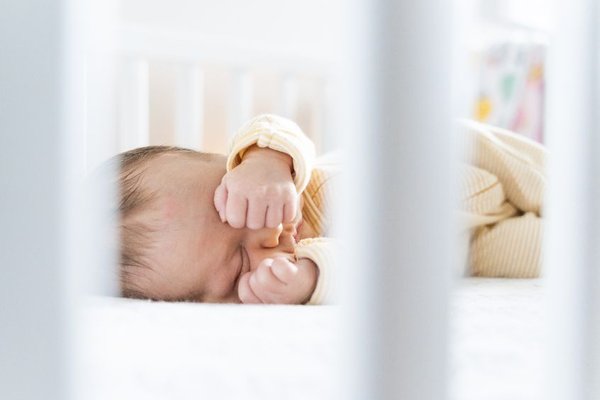
A newborn does not need a tropical bedroom to sleep comfortably. Safer-sleep guidance focuses much more on avoiding overheating than on keeping a baby extra warm. The best room temperature for newborn sleep is therefore not one universal thermostat number. A comfortably cool room, sensible sleepwear, and checks of your baby’s chest or neck matter more than chasing a perfect reading.
For a practical reference point, The Lullaby Trust in the UK recommends a baby room temperature of 16–20°C, or about 61–68°F. The American Academy of Pediatrics does not set a specific room-temperature range; instead, it advises keeping the room comfortable and dressing a baby in no more than one extra layer than an adult would wear in the same environment. Both approaches point to the same principle: do not let a sleeping newborn become too hot.
Why room temperature matters for newborn sleep
Newborns are still developing their ability to regulate body temperature, so parents naturally worry about whether the room feels too cool. The bigger safe-sleep concern is excessive warmth. Overheating is associated with a higher risk of sudden infant death syndrome, which is why heavy layering, indoor hats, thick loose bedding, and very warm rooms are discouraged.
A baby who is too warm may become sweaty or flushed, while a baby who is genuinely cold may need an additional clothing layer. The goal is a stable sleep environment where your baby can stay comfortable without being bundled.
What newborn wears to sleep depends on the room
There is no single outfit that works for every nursery. What a newborn wears to sleep should be adjusted to the actual room temperature, the fabric of the sleepwear, and how your baby feels. As a general rule, the AAP advises no more than one additional clothing layer compared with what an adult would need to feel comfortable in the same room.
In a comfortably cool room
In a room within the 16–20°C range used in UK safer-sleep guidance, many babies are comfortable in normal sleep clothing with an appropriately fitted wearable sleep bag or other sleepwear suited to the temperature. Follow the manufacturer’s sizing and warmth guidance rather than assuming one tog rating is right for every product.
In a warmer room
If the room is warm, reduce layers rather than keeping the baby dressed the same way year-round. In very warm weather, the Lullaby Trust says a lightweight short-sleeved layer or even just a diaper or nappy may be appropriate. The head should remain uncovered indoors.
In a cooler room
If the room is cooler than usual, add warmth through suitable clothing rather than piling loose blankets over a newborn. If you use a wearable sleep bag, follow its instructions. Keep the sleep space clear and avoid adding loose items simply because the room feels chilly.
How to tell if your newborn is too hot or too cold
Your baby’s hands and feet are not a reliable guide because they often feel cooler than the trunk even when the baby is comfortable. A better check is the chest or the back of the neck.
Signs that your baby may be too hot include sweating, damp or clammy skin, a noticeably hot chest, or flushed skin. If you notice these signs, remove a layer and reassess the room. When parents worry about overheating during newborn sleep, reducing unnecessary layers is usually more appropriate than adding items around the sleep space.
If the chest feels comfortably warm rather than hot, that is more useful than judging by chilly fingers. If your newborn seems unusually cold, lethargic, difficult to wake, unwell, or has a temperature that concerns you, seek medical advice rather than trying to fix the problem only by changing bedding.
A practical bedtime temperature check
Consider a common situation: the nursery feels comfortable at 8 p.m., but the heating stays on and the room becomes much warmer by midnight. Place a simple room thermometer near the sleep area but out of the baby’s reach, then check it later in the evening for several nights. You may discover that the temperature rises or falls more than expected.
This habit makes newborn sleep temperature decisions easier. You can adjust heating, ventilation, or clothing based on what the room actually does overnight rather than guesswork. It also helps with daytime naps.
Keep temperature in context with safer sleep
Room temperature is only one part of a safer sleep setup. Babies should be placed on their backs on a firm, flat sleep surface, with the area kept clear of pillows, soft toys, cot bumpers, and loose items that could cover the face. Weighted sleep products should not be used for infant sleep.
For the bigger picture, related topics include newborn safe sleep basics, choosing a safe sleep space for a newborn, and how to dress a newborn for sleep. These pieces work together and reduce the temptation to solve every temperature change by adding more bedding.
Common mistakes to avoid
One common mistake is assuming a newborn should feel as warm as an adult under a duvet. Another is leaving a hat on indoors after coming home from the hospital. Hats can trap heat, and safer-sleep guidance recommends keeping a baby’s head uncovered indoors unless a clinician has given specific instructions.
It is also easy to rely too heavily on rigid temperature-and-clothing charts. Fabrics, product construction, room airflow, and individual babies vary. Use charts only as a starting point. Your baby’s actual comfort and signs of overheating matter more than matching a chart perfectly.
FAQ
What is the best room temperature for newborn sleep?
There is no single worldwide number. The Lullaby Trust recommends 16–20°C, or about 61–68°F, while AAP guidance focuses on keeping the room comfortable and preventing overheating rather than prescribing an exact thermostat setting.
Should a newborn sleep in a hat if the room is cool?
Generally, no. Safer-sleep guidance advises keeping a baby’s head uncovered indoors after leaving the hospital unless a healthcare professional has given different advice for your baby.
How can I tell if my newborn is overheating?
Check the chest or back of the neck. Sweating, clammy skin, flushed skin, or a hot chest can indicate that your baby is too warm. Hands and feet are less useful because they often feel cool even when a newborn is comfortable.
Do I need a room thermometer?
It is not the only way to judge comfort, but it can be helpful because room temperature can change overnight and is difficult to estimate by feel. Use the reading together with sensible sleepwear and regular checks of your baby.
Finding a comfortable balance
A good newborn sleep environment is comfortably cool, predictable, and free from unnecessary layers. Use 16–20°C as a practical reference if you follow UK guidance, while remembering that the AAP does not define one required temperature. Dress your baby for the room, keep the head uncovered, check the chest or back of the neck, and respond to signs that your newborn is too warm or unwell. That approach is more useful than trying to hit one perfect number every night.
