

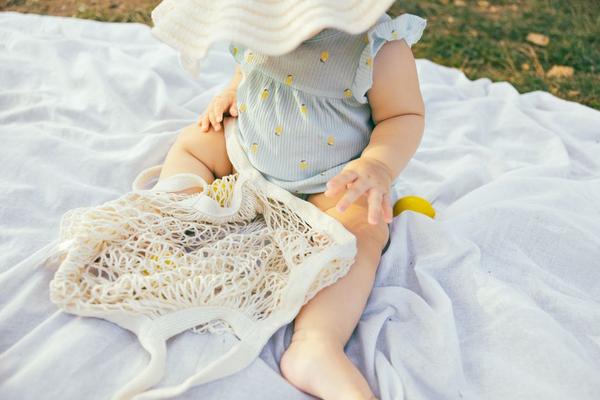
Warm weather makes dressing a baby look simple, but summer outfits need to do more than keep them cool. The best summer baby clothes balance airflow, coverage and comfort while helping reduce exposure to strong sunlight. Babies have delicate skin and can also become too hot more quickly than adults.
A practical summer wardrobe does not need to be large. A few breathable everyday outfits, a reliable sun hat for baby outings and well-designed baby swimwear can cover most situations. The aim is not to add heavy layers, but to choose lightweight pieces that cover vulnerable areas without trapping heat.
Start With Shade, Then Build the Outfit
Clothing is only one part of summer sun safety. NHS guidance says babies under six months should be kept out of direct sunlight. Older babies should also stay in the shade as much as possible, particularly between 11am and 3pm when the sun is usually strongest in the UK.
Use a fitted pushchair parasol or sunshade, and never drape a blanket or muslin over the pram because this can restrict airflow and cause overheating. Once shade is sorted, clothing becomes an extra protective layer rather than the only defence.
What Makes Good Summer Baby Clothes?
Lightweight, Breathable Fabric
Soft cotton and other breathable fabrics help heat escape. A single lightweight layer may be enough in hot weather, especially for a young baby resting in the shade. Avoid thick, stiff or heavily lined garments that can make a baby feel clammy.
Very thin or open-weave fabric may let more sunlight reach the skin. Hold the material up to a bright window. If you can easily see through it, a light but more closely woven fabric may offer better coverage.
Loose, Comfortable Coverage
A sun protection outfit should cover the shoulders and, where practical, the arms and legs without fitting tightly. Loose long-sleeved tops, lightweight rompers and relaxed trousers provide useful coverage while still allowing movement and ventilation.
Check that seams feel soft, fastenings do not press into the skin and the neckline is not restrictive. Easy poppers or zips also make changes quicker when everyone is hot.
Minimal, Flexible Layers
A short-sleeved bodysuit may work indoors, while a thin long-sleeved layer can be added for a shaded walk. Remove layers if your baby feels hot or sweaty. The chest or back of the neck is a better guide to warmth than hands and feet, which often feel cooler.
Is UPF Baby Clothing Worth Buying?
UPF baby clothing is designed and tested to reduce the amount of ultraviolet radiation passing through the fabric. It can be useful for holidays, beach days, garden play and other situations involving longer periods outdoors.
Look for a clearly stated UPF rating, good body coverage and comfortable fabric. UPF 50+ is widely available in specialist sunwear. Follow the care instructions, because stretching, wear and incorrect washing may affect how a garment performs.
UPF clothing does not make direct sun exposure safe. Shade remains essential, especially for babies under six months. For older babies, sunscreen should be used on exposed skin in line with NHS guidance, alongside clothing and shade rather than instead of them.
How to Choose a Sun Hat for Baby
A baseball cap leaves the ears and neck exposed. A better sun hat for baby use has a wide brim or a long flap at the back to shade the face, ears and neck. The brim should stay out of the eyes while remaining soft and comfortable.
Choose the correct size. A loose hat can slip over the face, while a tight one may leave marks. Breathable fabric and ventilation panels can improve comfort. Always supervise a baby wearing accessories with straps or cords.
Choosing Baby Swimwear for Sun Protection
Standard swimming costumes can leave large areas uncovered. Sun-protective baby swimwear usually offers longer sleeves, a higher neckline and more coverage across the back and thighs. A one-piece suit or rash vest with matching bottoms can create a practical sun protection outfit.
Look for UPF-rated fabric, flat seams and enough stretch for movement. The suit should not sag when wet or dig into the neck, thighs or nappy area. When a swim nappy is needed, check the outfit still fits comfortably over it.
Water-resistant sunscreen is still needed on exposed skin for babies aged six months and over. NHS advice recommends at least SPF 30 with UVA and UVB protection. Apply it generously, reapply every two hours, and apply again immediately after swimming, sweating or towel drying.
A Practical Summer Clothing Checklist
When shopping for summer baby clothes sun protection should be considered alongside comfort and easy care. A useful capsule wardrobe may include lightweight bodysuits, two or three loose long-sleeved outfits, breathable trousers, a wide-brimmed hat and UPF baby clothing for longer outdoor trips. Add covered baby swimwear for pool or beach days.
Choose machine-washable pieces that can cope with sunscreen and frequent changes. Buying for your real routine is usually better than filling a drawer with specialist items that are rarely worn.
Common Summer Dressing Mistakes
One mistake is assuming hot weather always means as little clothing as possible. Bare skin may feel cooler, but it is more exposed to sunlight. Lightweight coverage and shade usually provide a better balance.
Another is treating sunscreen as complete protection. It can rub off, wash away or be missed on small areas such as the ears and feet. Clothing, a suitable hat and shade reduce reliance on perfect application.
Babies can also overheat in travel systems and enclosed spaces. Never leave a baby in a parked car, and regularly check them during warm-weather outings.
Frequently Asked Questions
What should a baby wear on a hot summer day?
In shade or indoors, one lightweight breathable layer may be enough. Outdoors, use loose clothing that covers more skin, add a wide-brimmed hat and keep the baby shaded. Adjust layers according to the temperature and how warm the baby feels.
Can babies under six months wear sunscreen?
NHS guidance does not recommend sunscreen for babies under six months. They should be kept out of direct sunlight and protected with shade and lightweight covering clothes.
Do babies need UPF clothing in the UK?
It is not essential for every outing, but it is convenient during strong sun, holidays, swimming and longer outdoor activities. Regular closely woven clothing can also provide useful coverage when combined with shade.
What baby swimwear offers the most sun protection?
Choose a comfortable UPF-rated suit with long sleeves, a higher neckline and good coverage across the back and legs. Use shade and suitable sunscreen on exposed skin for babies aged six months and over.
Build a Cooler, Safer Summer Wardrobe
The most effective summer wardrobe is simple: breathable fabrics, loose coverage, a secure wide-brimmed hat and practical swimwear for water days. UPF pieces add convenience, but they work best with shade, sensible timing and sunscreen for babies old enough to use it.
Choosing clothes for function as well as appearance makes summer outings more comfortable and less stressful. A well-planned sun protection outfit helps cover delicate skin while still giving a baby freedom to move and enjoy warm days safely.
